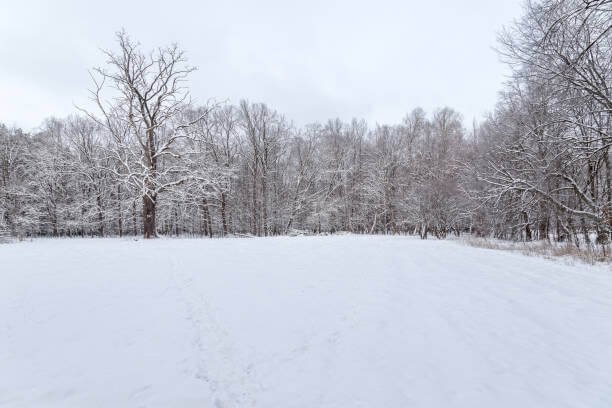
Here in the Chicagoland area, we are in the midst of a brutal cold snap, experiencing temperatures as low as -15 degrees Fahrenheit (-26 C)! This phenomenon has been dubbed a polar vortex ever since the first notable event in 2014. We experience the polar vortex when the Arctic jet stream weakens, allowing freezing polar air to drift down into Canada and the United States. This effect becomes more likely during El Nino cycles where warmer Pacific temperatures increase the odds of a weakened jet stream.
When we experience cold temps, it’s easy to turn up the thermostat and put on a heavy coat, but the plants in our landscape are not mobile and typically don’t wear winter clothes. So how do trees survive these temperature extremes? What makes some plants hardy and others not so hardy? Let’s explore some of the ways our urban trees cope with extreme weather.

Leaf Drop
Trees that shed their leaves in fall are called deciduous and typically have broad leaves instead of needles. Some trees, like Oaks, may retain their spent leaves until next spring but are still considered deciduous. One of the biggest challenges for plants in the winter is moisture retention while the ground is mostly frozen over. Thus, shedding leaves in the fall limits the amount of water lost through the tree’s tissues to the surrounding environment. A plant retaining its leaves through winter would lose a drastic amount of moisture and potentially desiccate and kill the entire plant.
The exact name for this process of shedding leaves is called abscission. It begins with the leaves losing their green pigment as the tree recoups some of the energy stored in leaves by chemically breaking down the green chlorophyll and exposing the bright reds, yellows, and oranges that we all love in the fall. Next, the horizon where the leaf stem, also known as the petiole, produces layers of cells between the branch attachment point and the leaf. These layers develop into scar tissue which prevents any more flow of nutrients or water from the leaf into the branch it is attached to. Some trees are very good at this process and will drop their leaves on a strict regimen, like Ginkgo. Other trees take a longer time to produce this separation layer and may even retain spent leaves through winter such as the previously mentioned Oak.
Leaf Retention
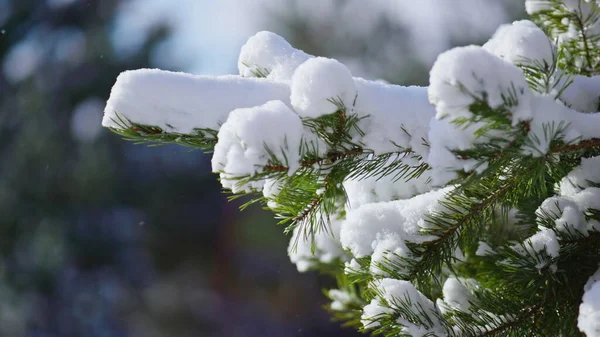
We covered deciduous trees, so let’s also talk about evergreen trees. These plants hold their leaves throughout the winter season but have special adaptations to help them survive harsh weather. First, most evergreen plants in the Chicagoland area have needle-like leaves. Examples include Pines, Spruce, and Junipers. These needles are still considered leaves, but they have been modified over millions of years of evolution to allow survival in harsher environments. The needles are narrower than deciduous tree leaves, which limits the surface area by which moisture can be pulled from the plant. Needles also have a thicker waxy coating, or cuticle in specific terms. The thick coating of wax helps protect the delicate tissues inside the needle from winter damage. The needles on evergreen trees also have much tighter stomata openings. Stomata are the tiny pores on leaf surfaces that allow direct gas exchange from the plant.
Needle retention through winter allows these evergreen trees to take advantage of a prolonged growing season. They may continue producing sugars and up-taking nutrition from the soil even through the winter, albeit at a much slower pace. However, this also means the tree may be losing moisture during the winter season when it’s unable to completely stop transpiration from its needles. This is why it’s so important to make sure evergreen plants have plenty of moisture present in the ground before the first hard freeze sets in, especially on newly planted evergreen trees and shrubs. An anti-desiccant spray also helps prevent moisture loss by applying a thin protective layer of polymer over the needles.
Hibernation
Trees that are hardy in colder temperatures also have special adaptations allowing them to exploit the physical properties of water for extreme cold temperature survival. All trees have a measurable temperature at which they cannot survive. This temperature is usually dictated by what temperature would form ice crystals within the cells of the tree and cause damage and rupture to key cell components. This process can be mitigated by the adaptations of different trees by increasing the concentration of soluble fats and acids inside cells and increasing cell membrane permeability. All of these adaptations help by lowering the freezing point of water, or by helping move ice crystals away from critical cellular structures thereby mitigating potential harm. These trees are performing these adaptations on a yearly cycle on a cellular level without even thinking about it. Amazing!
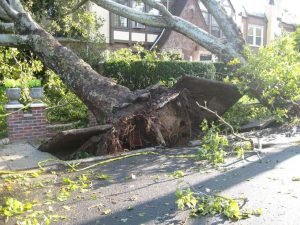
Even with these adaptations, winter damage and mortality may still happen. Broken branches or fallen trees are common following a storm or extreme weather event. If you wake up to a damaged or hazardous tree, Homer Tree Care is prepared to respond safely and professionally to remove damaged and hazardous tree debris. Contact our arborists today for a free consultation.