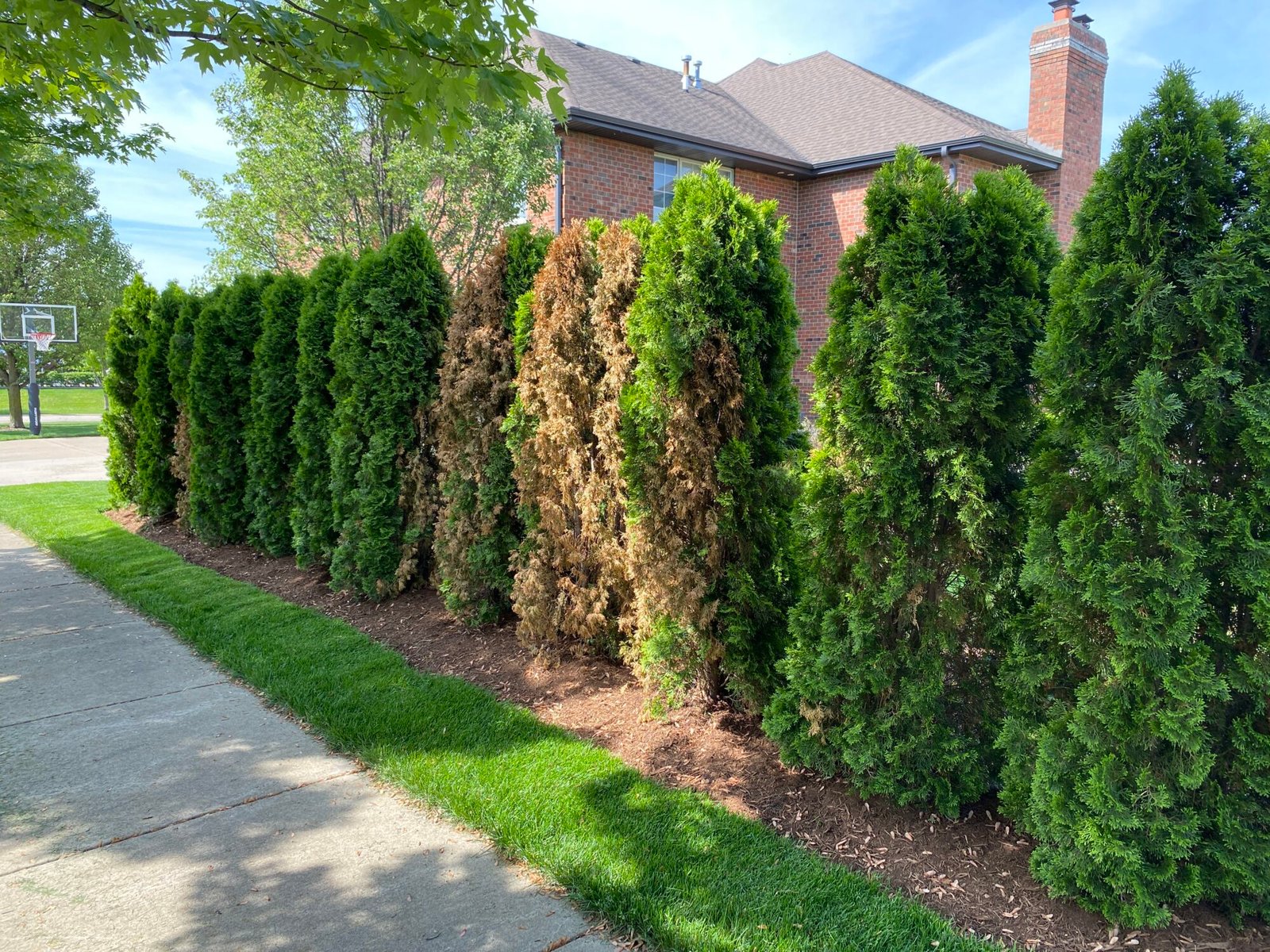
Recently, a sample sent from our team at Homer Tree Care tested positive for Phytophthora, a genus of soil pathogens and water molds notorious for causing root rot in various tree species. While Phytophthora ramorum is widely known for causing sudden oak death, it’s important to recognize that not all Phytophthora species belong to the ramorum species. This blog post will delve into the characteristics, symptoms, and management strategies for Phytophthora root rot, focusing on arborvitae, which are highly susceptible to this pathogen. Additionally, we’ll highlight the record wet spring we experienced this year, which has created ideal conditions for the proliferation of this disease.
What is Phytophthora?
Phytophthora is a genus of soil-borne pathogens and water molds that thrive in wet conditions. These pathogens produce swimming spores called zoospores, which move through water to infect tree roots and lower trunk tissues. Once established, Phytophthora girdles the infected root or trunk, eventually leading to the tree’s death. The pathogen’s ability to survive in soil for extended periods and its preference for wet environments make it a persistent threat to many tree species.
Symptoms and Diagnosis
Identifying Phytophthora root rot can be challenging due to its non-specific symptoms and the absence of easily recognizable fruiting bodies or spores on infected tissue. However, some common symptoms include:
Wilting and Stunted Foliage
Trees may exhibit wilting and stunted growth, especially in low, wet areas.
Chlorosis
Yellowing of the foliage is a common sign of infection.
Dieback
Infected trees, particularly arborvitae, may show streaking dieback, a hallmark of Phytophthora infection.
Root Symptoms
Feeder roots become black, fine, and dead. The cambium at the root collar may appear red-brown or butterscotch-colored.
Sudden Death
Trees can turn yellow-red and die abruptly, especially when stressed by environmental factors such as drought or excessive moisture.
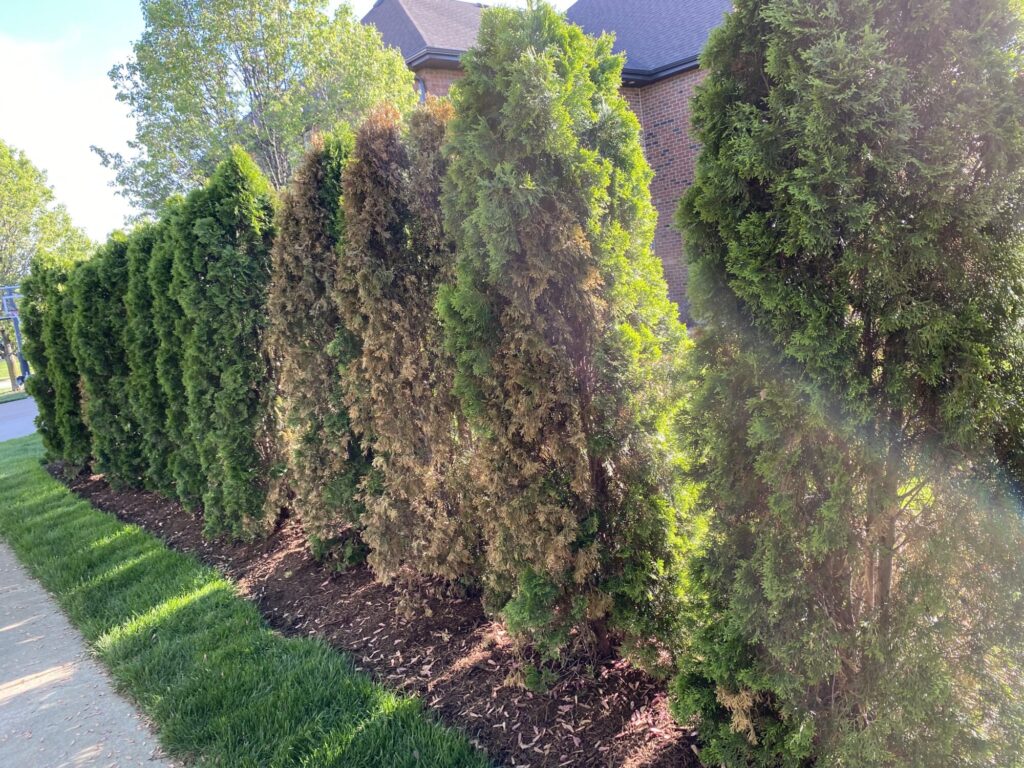
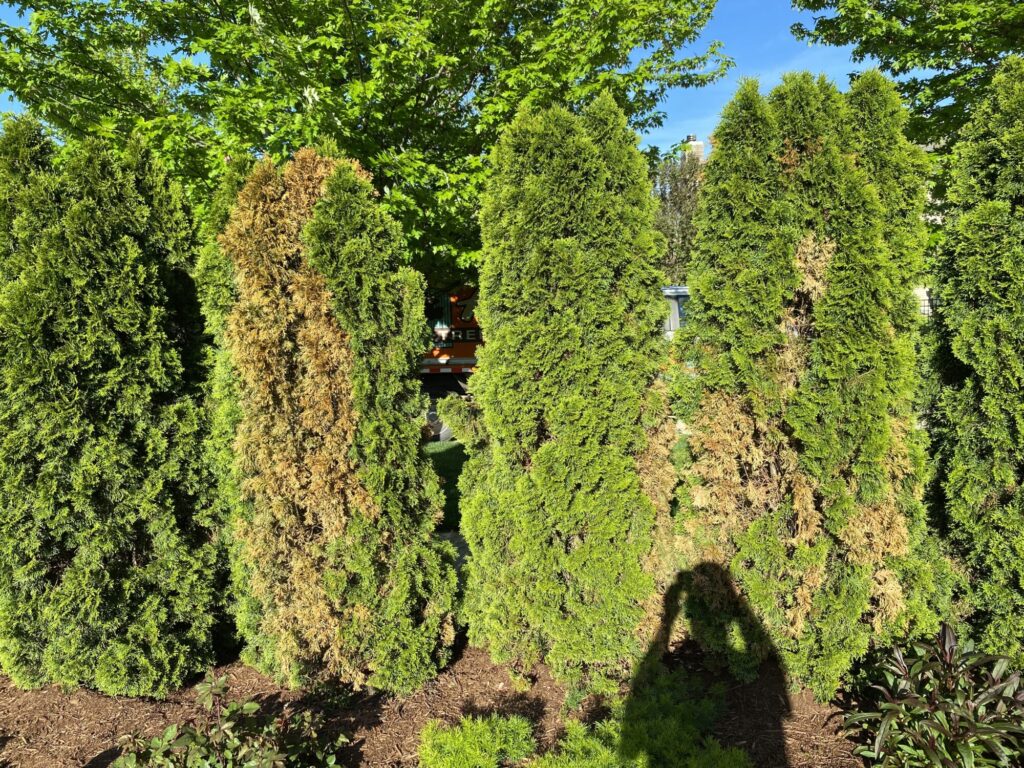
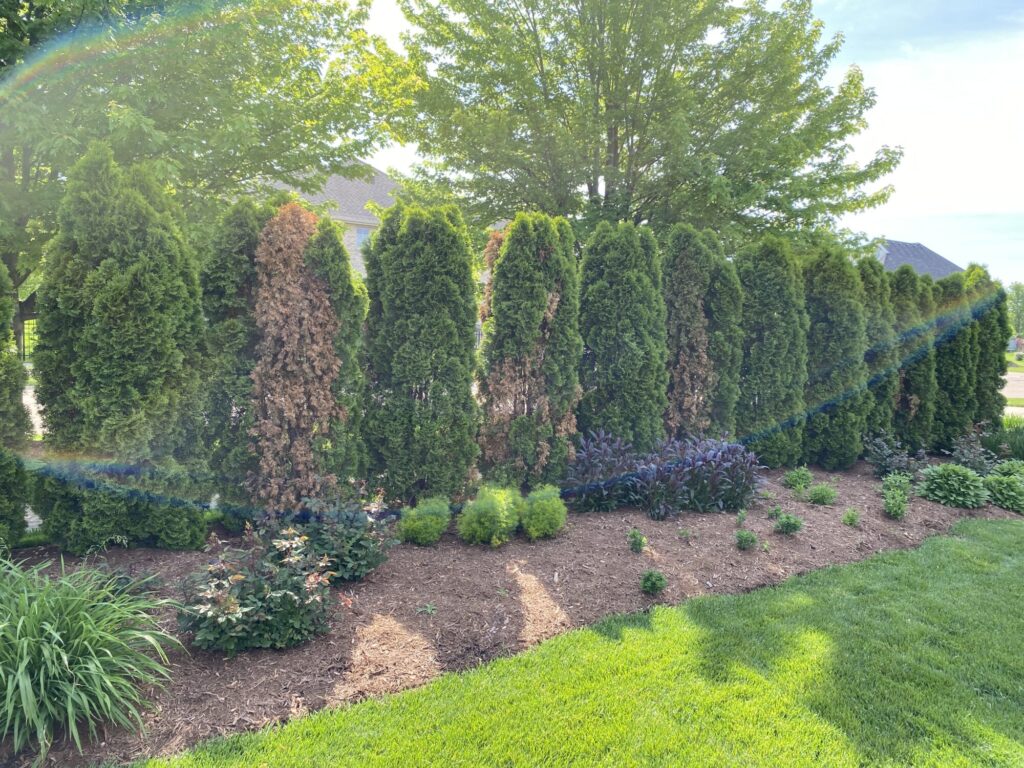
To confirm a Phytophthora infection, the pathogen must be isolated in a pure culture medium, which can be challenging due to overgrowth by other fungi, particularly Pythium species.
Life Cycle of Phytophthora
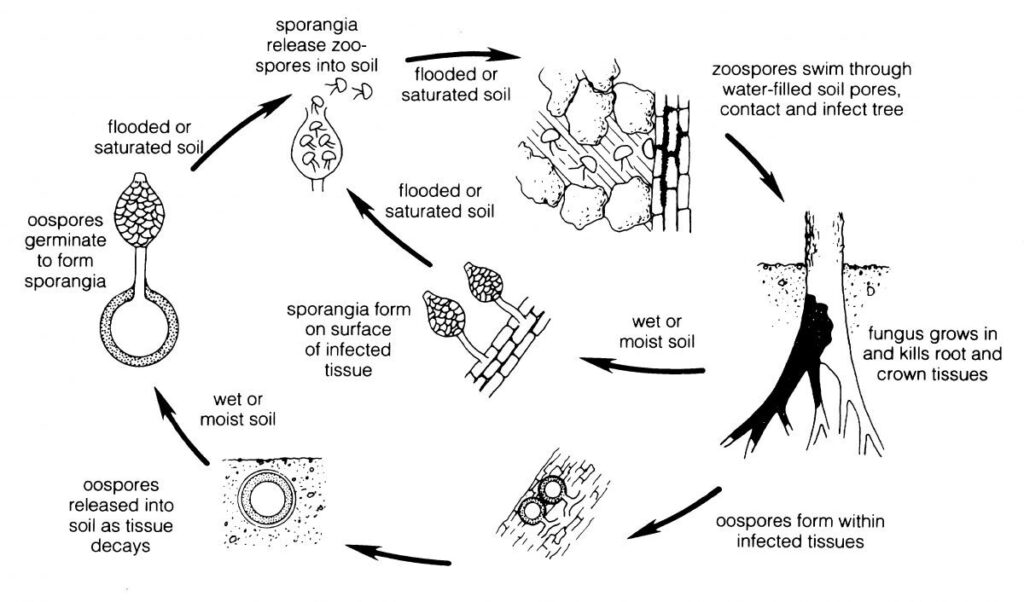
Phytophthora species survive indefinitely in soil by producing thick-walled, microscopic survival structures called oospores and chlamydospores in infected host tissue. These spores enable the fungus to persist in the absence of a host. When conditions are favorable, zoospores are produced and swim through water to contact and infect tree roots or lower trunk tissues. The fungus grows into host tissue, girdling and eventually killing the tree. As the host dies, the fungus produces survival structures in decaying tissue, perpetuating the cycle.
Integrated Pest Management Strategies
Managing Phytophthora root rot requires a combination of cultural practices, resistant species selection, and careful site management. Here are some key strategies:
Choose Resistant Species
Plant tree species that are resistant to Phytophthora. For example, Nordmann fir, Turkish fir, and Douglas fir show resistance to varying diseases.
Proper Planting and Care
Ensure trees are planted in well-drained soils and avoid overwatering, especially for mature trees. Use drip irrigation for young trees to provide targeted moisture without over-saturating the soil.
Reduce Stress
Avoid practices that stress trees, such as excessive fertilization, herbicide damage, and improper watering.
Avoid Soil Compaction
Prevent heavy equipment and foot traffic in areas where trees are planted to avoid compacting the soil, which can exacerbate root rot.
Prevent Soil Movement
Avoid moving soil from infected areas to new planting sites. Disinfect tools and equipment after working in infected areas to prevent the spread of the pathogen.
Record Wet Spring: A Breeding Ground for Phytophthora
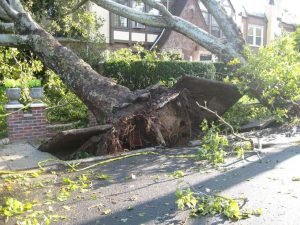
This year, we experienced a record wet spring, creating ideal conditions for Phytophthora to thrive. Excessive moisture in the soil promotes the movement and germination of zoospores, increasing the risk of infection for susceptible trees. It’s crucial to be vigilant during such wet periods and implement preventive measures to protect your trees from this persistent pathogen.
Homer Tree Care: Your Partner in Tree Health
At Homer Tree Care, we understand the challenges posed by Phytophthora root rot and other tree diseases. Our team of expert arborists is equipped to diagnose infections, send samples for lab testing, and provide effective treatments to prevent and manage Phytophthora. If you suspect your trees may be infected or if you want to take proactive measures to protect your landscape, don’t hesitate to contact us for a free consultation and expert advice.